You are visiting the United Kingdom Kee Safety website from United States. Would you like to go to the United States site?
You are visiting the United Kingdom Kee Safety website from United States. Would you like to go to the United States site?

Working at height remains one of the most dangerous activities across UK industry. Every year, falls from height continue to be a leading cause of serious injury and workplace fatalities. Whether tasks take place on rooftops, ladders, or elevated access routes, the risks are significant when controls are not properly selected and managed.
Under the work at height regulations, employers must ensure that any activity where a person could fall a distance liable to cause harm is properly planned, supervised, and carried out using suitable protection. Understanding the difference between collective and personal fall protection is essential for maintaining compliance and keeping workers safe.
This guide explains the options available and how Kee Safety systems support safer working at height across a wide range of environments.

Kee Walk creates a defined safe access route across the roof, reducing exposure to fragile surfaces and slip risks.
The regulations define working at height as any work where a person could fall and suffer personal injury. This includes work carried out close to ground level, at low heights, or between one level and another.
Typical examples include roof maintenance, plant inspections, cleaning, construction activity, and access across fragile roofs. The law does not specify a minimum height. If a fall could occur, the height regulations 2005 apply.
The Health and Safety Executive confirms that falls from height remain the most common cause of fatal accidents at work, particularly where tasks are rushed or conditions change unexpectedly.
The work at height regulations place clear duties on the employer, including those who are self employed. These duties apply regardless of task duration or worker experience.
Employer responsibilities include:
Ensuring work is properly planned
Carrying out suitable risk assessments
Selecting the right equipment for the task
Maintaining and inspecting equipment
Providing appropriate training
Ensuring workers are competent and supervised
The regulations also apply to short duration tasks such as ladder work and to activities near fragile surfaces. Employers must take all reasonably practicable steps to avoid working at height where possible.

Kee Guard provides collective roof edge protection to help prevent falls during routine access and maintenance.
UK height regulations require a structured approach to managing risk.
Where possible, work should be avoided at height altogether. If this cannot be achieved, measures must be introduced to prevent falls. Only where prevention is not reasonably practicable should systems be used to reduce the consequences of a fall.
This hierarchy places collective protection above personal protection wherever feasible.
Collective protection refers to systems that protect everyone on site without relying on individual behaviour. These solutions remain in place and provide continuous protection for all workers accessing the area.
Examples include roof guardrails and edge protection, walkways and working platforms, step overs, protected access routes, and skylight protection systems.
Kee Safety provides a comprehensive range of collective solutions including Kee Guard roof edge protection systems, Kee Walk rooftop walkways, Kee Step platforms, and skylight protection. These systems reduce exposure to falls and falling objects and are particularly effective for high traffic or routine access areas.
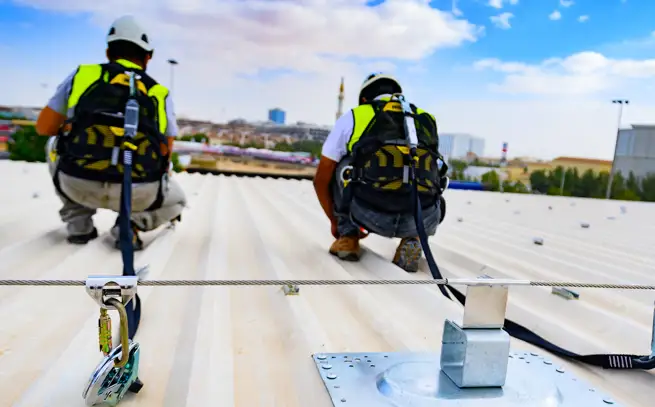
Kee Line supports personal fall protection where collective protection is not reasonably practicable.
Personal fall protection relies on the individual user wearing and connecting to equipment correctly. These systems are typically used where collective protection cannot be installed.
Personal protection systems include harnesses, lanyards, lifelines, anchor points, and fall arrest equipment.
Kee Safety supplies personal protection solutions such as Kee Line horizontal lifelines and anchor systems that enable safe access where guardrails are not suitable. These systems require correct training, inspection, and rescue planning to remain effective.
All working at height activities must be supported by documented risk assessments. These should consider fall distance, landing level, fragile surfaces, ladder access, weather conditions, falling objects, frequency of access, and worker competence.
Risk assessments should be reviewed whenever site conditions change, including plant upgrades, roof alterations, or new access routes.

A site-specific risk assessment helps identify whether collective or personal fall protection is required to meet working at height regulations.
Training plays a vital role in managing working at height risks. Anyone carrying out height-related tasks must receive appropriate instruction covering hazard awareness, equipment use, safe access methods, and emergency procedures.
Competence involves more than attendance on a course. A competent person must be able to identify hazards, assess risks, and apply suitable control measures. New starters should never work at height without supervision, and refresher training should be provided when tasks or environments change.
Falls from height rarely result from a single failure. They are often caused by poor planning, unsuitable equipment, inadequate training, or missing protection. Unprotected edges, fragile surfaces, and incorrect ladder use remain common contributors.
Temporary solutions used beyond their intended purpose, changes to roof layouts, or unfamiliar environments can introduce new hazards if risk assessments are not updated.
Kee Safety supports organisations through every stage of working at height compliance. From system design and specification to installation and inspection, our solutions help employers meet the requirements of the height regulations 2005.
Our collective and personal protection systems are tested, certified, and designed to integrate into real working environments, supporting long-term safety and risk reduction.